
How Much Does it Cost to Adopt in Florida?

Need Help Fast?

Table of Contents

Florida couple smiling with their adopted toddler at home

In 2026, Florida adoption costs range from $0 for foster care adoption to about $65,000 for a private agency newborn placement. The type of adoption you pick matters most. It drives the price far more than where you live or which attorney you hire.

Key Takeaways

  • Foster care adoption: $0 to $2,500. The state covers nearly every fee.
  • Stepparent adoption: $1,000 to $5,000, mostly attorney and filing fees.
  • Private agency newborn: $30,000 to $65,000, the most expensive path.
  • Federal adoption tax credit (2026): up to $17,670, with $5,120 refundable.
  • Home study: $900 to $3,000 for private adoptions, $0 for foster care.

How Much Does Adoption Cost
in Florida in 2026?

The cost to adopt in Florida starts at $0 for foster care. A private newborn placement through a licensed agency can reach $60,000 to $65,000, according to American Adoptions of Florida.[1] Your adoption type sets the price range. Everything else just moves you within it.

Here is a realistic breakdown by adoption type in 2026:

  • Foster care adoption: $0 to $2,500. The state covers most or all costs.
  • Stepparent adoption: $1,000 to $5,000, mostly legal fees.
  • Relative or kinship adoption: $1,500 to $5,000.
  • Private agency (newborn): $30,000 to $65,000.
  • Independent or attorney adoption: $15,000 to $40,000.
  • International adoption: $25,000 to $60,000 or more.

Florida Statutes Chapter 63 governs every adoption in the state. It sets the rules for consent, home studies, placement, and finalization.[2]

Florida adoption cost range by type, 2026Horizontal range bars showing total cost by adoption type: foster care $0 to $2,500; stepparent $1,000 to $5,000; relative or kinship $1,500 to $5,000; independent or attorney $15,000 to $40,000; international $25,000 to $60,000; private agency $30,000 to $65,000.Florida Adoption Cost Range by TypeTotal estimated cost in 2026, from lowest to highest$0$10k$20k$30k$40k$50k$60kFoster careStepparentRelative / kinshipIndependent / attorneyInternationalPrivate agency$0–$2,500$1,000–$5,000$1,500–$5,000$15k–$40k$25k–$60k+$30k–$65kSource: American Adoptions of Florida; Sacks & Sacks Law, 2026.
Adoption type drives almost the entire cost difference, from near-zero foster care to a $65,000 private agency placement.

Foster Care Adoption ($0–$2,500)

Foster care adoption is by far the most affordable path. The Florida Department of Children and Families (DCF) covers most adoption costs for children in the state foster system. Thousands of Florida children in foster care are waiting for permanent families right now. The federal Adoption and Foster Care Analysis and Reporting System (AFCARS) tracks those numbers each year.[3]

What the state typically covers:

  • Home study fees
  • Court filing fees
  • Legal representation through DCF
  • Training and preparation classes
  • A monthly subsidy for children with special needs, which may continue to age 18 or 21
  • Medicaid coverage for the adopted child
Adoptive parent laughing with a foster child in a Jacksonville home
Foster care adoption through Florida DCF costs $0 to about $2,500, with the state covering most fees.
From our practice
In our Jacksonville family law work, foster care adoption is the path families overlook most. They assume adoption always costs tens of thousands of dollars. For Florida’s waiting children, it usually does not.

Stepparent Adoption ($1,000–$5,000)

Stepparent adoption is one of the most common adoptions we handle, and one of the least expensive. It often follows a remarriage after a divorce. Under F.S. 63.042, a stepparent married to the child’s legal parent can often skip the full home study. A few conditions apply.[2] Typical costs:

  • Attorney fees: $1,000 to $3,500
  • Court filing fees: $300 to $400
  • Background check: $50 to $100
  • Home study, if required: $900 to $3,000

The biggest variable is whether the other birth parent consents. If consent is contested, the case adds a termination of parental rights hearing. Legal fees then climb.

Private Agency Adoption ($30,000–$65,000)

Private agency adoption usually means a newborn placement. It is the most expensive option. In 2026, the average cost through a licensed Florida agency runs $60,000 to $65,000, according to American Adoptions of Florida.[1] That is one full-service agency’s estimate at the high end of the market.

For perspective, national estimates for private infant adoption run lower and wider. They commonly fall between $20,000 and $50,000, depending on the agency and state. The independent or attorney route below runs $15,000 to $40,000 in Florida. The agency fee total covers:

  • Agency fees: $15,000 to $30,000 (matching, counseling, administration)
  • Birth mother expenses: $5,000 to $15,000 for living and medical costs, allowed under F.S. 63.097
  • Home study: $900 to $3,000
  • Legal fees: $2,500 to $10,000
  • Court costs: $300 to $500
  • Post-placement supervision: $500 to $2,000

Independent / Attorney Adoption ($15,000–$40,000)

Independent adoption happens when a birth parent and adoptive parent connect directly. An attorney handles the legal work. Under F.S. 63.085, an adoption entity, an attorney or agency, must still take part to keep the placement legal.[2] Costs run lower than agency adoption because there are no agency fees.

International Adoption ($25,000–$60,000+)

International adoption follows two sets of laws. It involves U.S. immigration law under the Hague Convention and the laws of the child’s birth country. The U.S. Department of State oversees the process. Costs include agency fees, USCIS immigration fees, travel (often two or three trips abroad), document translation, and legal fees in both countries.

What Does a Home Study
Cost in Florida?

A private home study in Florida averages $900 to $3,000, according to American Adoptions. Complex or rushed cases can run higher.[4] Nearly every Florida adoption requires a home study. Stepparent cases are sometimes an exception. For foster care adoption, the state pays for it.

A Florida home study includes:

  • Background checks: criminal history (FDLE and FBI fingerprinting), child abuse registry, and sex offender registry
  • Home visits: at least one visit to check safety, sleeping arrangements, and the home environment
  • Interviews: individual and joint interviews with every household member
  • References: three to five personal and professional references
  • Financial review: income verification, tax returns, and insurance
  • Medical clearance: a physical exam for each adoptive parent
  • Autobiographical statements: personal history and parenting approach

A completed home study is valid for one year.

Florida law requires an adoption entity to handle every adoption. That means a licensed agency or attorney, under F.S. 63.039.[2] Attorney fees usually break down like this:

  • Petition filing and court representation: $2,500 to $5,000 (uncontested)
  • Contested adoption or termination of parental rights hearing: $5,000 to $15,000 or more
  • Interstate adoption (ICPC compliance): $3,000 to $8,000 extra
  • Birth parent consent or relinquishment: $500 to $2,000

Under F.S. 63.082, a birth mother cannot sign consent to a newborn adoption right away. She must wait until 48 hours after the birth. The wait can end sooner if she is told in writing that she is fit to leave the hospital or birth center. Whichever comes first controls. Once signed, the consent is hard to undo. A court can cancel it only if it was obtained by fraud or duress.[2]

How Can You Adopt for Free
or Low Cost in Florida?

If cost is a barrier, several paths lower or remove adoption expenses. Foster care adoption through DCF is the clearest route to a near-zero total. The federal adoption tax credit can offset much of what you do spend.

  • Foster care adoption through DCF: $0 or near-zero. The state covers the home study, legal fees, and court costs, and many children come with an ongoing subsidy and Medicaid.
  • Stepparent adoption: as low as $1,000 when the other birth parent consents and no home study is required.
  • Non-profit support: groups like the Dave Thomas Foundation for Adoption fund recruiters and support for families adopting from foster care.
  • Military families: the military adoption reimbursement program repays up to $2,000 per child, capped at $5,000 in a calendar year, for qualified expenses.
  • Federal adoption tax credit: up to $17,670 in 2026 to offset qualified expenses, now partly refundable (see the tax-credit section below).

What Financial Assistance
Is Available for Adoption?

Several programs help families afford adoption. They range from federal tax relief to private grants you never repay. The Child Welfare Information Gateway, a federal resource, keeps a running list of assistance options by state.

Government programs

  • Federal adoption tax credit: up to $17,670 in 2026 (details below)
  • Florida adoption subsidy: monthly payments for children with special needs adopted from foster care
  • Medicaid: continues for foster care adoptees, often to age 18 or 21
  • Title IV-E funding: federal support for foster care adoptions

Grants you do not repay

Employer benefits

Many large employers offer adoption assistance, often $5,000 to $25,000 per child. Check your HR benefits before you assume you will pay full price. This is one of the most overlooked sources of adoption funding.

What Is the Federal Adoption
Tax Credit for 2025–2026?

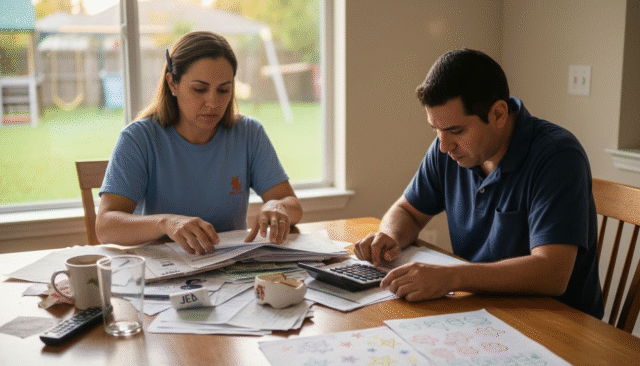
Couple planning their Florida adoption budget with a calculator and paperwork
The federal adoption tax credit reaches $17,670 per child in 2026, with up to $5,120 refundable.

The federal adoption tax credit is the single most valuable tool for managing adoption costs. For tax year 2025, the maximum credit is $17,280, according to the Internal Revenue Service.[5] For 2026 it rises to $17,670 per child. That increase comes from the IRS inflation adjustments in Revenue Procedure 2025-32.[6]

What changed for 2025 and beyond, under the One Big Beautiful Bill Act:

  • Partly refundable for the first time since 2011. Up to $5,000 is refundable for 2025 and $5,120 for 2026, so you get money back even if you owe no tax.[6]
  • Carryforward. You can carry the non-refundable portion forward up to five years. The IRS lists this as up to $12,280 for 2025. For 2026 it is $12,550, the $17,670 maximum minus the $5,120 refundable amount.
  • Special needs adoptions. You can claim the full credit even if your actual expenses were lower.
  • Income limits apply. For 2025 the credit phases out between $259,190 and $299,190 of modified adjusted gross income.[5]

Qualified expenses include agency fees, attorney fees, court costs, the home study, travel, and re-adoption costs for international adoptions. Expenses paid by an employer or a government program do not count. File IRS Form 8839 with your return. Check with a tax professional about your situation.

What Are the Hidden
Costs of Adoption?

Beyond the obvious fees, some costs catch families off guard. Across adoption types, these are the line items clients forget most:

  • Failed placements. If a birth mother changes her mind before signing consent, you may lose non-refundable expenses. Some agencies offer risk-sharing programs.
  • Travel. Trips to the birth mother, the courthouse, or, for international adoption, the birth country. Budget $2,000 to $10,000 or more for overseas travel.
  • Birth mother living expenses. Florida allows court-approved living expenses during pregnancy under F.S. 63.097, which can add $5,000 to $15,000.
  • Post-adoption counseling. Therapy for the child or family runs $100 to $200 per session. Many foster care adoptions include subsidized counseling.
  • Second-parent adoption. For unmarried or same-sex couples, a second-parent adoption may add $1,500 to $3,500.
  • Document authentication. For international adoptions, apostille and authentication fees can add $500 to $2,000.

How Does Florida Adoption Cost
Compare to Nearby States?

Florida sits in the typical national range for private adoption. Foster care adoption is near zero in every state. The biggest differences between states are filing fees, birth-parent expense rules, and home study pricing. The headline agency cost varies less. Here is how Florida lines up with its neighbors.

Estimated 2026 cost ranges by adoption type. Foster care figures reflect state-covered costs.
State Foster care Stepparent Private agency newborn
Florida $0–$2,500 $1,000–$5,000 $30,000–$65,000
Georgia $0–$2,500 $1,500–$5,000 $25,000–$45,000
Alabama $0–$2,000 $1,000–$4,000 $25,000–$40,000
Texas $0–$2,500 $1,500–$6,000 $30,000–$60,000
New York $0–$3,000 $2,000–$6,000 $35,000–$70,000

Ranges are estimates for comparison. They vary by county, agency, and case complexity. For Florida’s binding rules, the controlling law is Chapter 63.[2]
How to Build a Realistic
Adoption Budget

Family with young child after finalizing a Florida adoption
Most Florida adoptions finalize 30 to 90 days after placement, the milestone every budget is built toward.

A clear budget prevents surprises. It also points you toward the right adoption path. We walk Jacksonville families through these seven steps before they commit to any agency or attorney.

  1. Pick your adoption type. This sets your cost range more than any other choice.
  2. Get written fee schedules from at least two or three agencies or attorneys before committing.
  3. Factor in the tax credit. Up to $17,670 comes back to you in 2026, with part of it refundable.[6]
  4. Apply for grants early. Grant cycles fill up, and processing can take three to six months.
  5. Check employer benefits. Many families never realize their employer offers reimbursement.
  6. Build a contingency fund. Add 15 to 20 percent for unexpected expenses.
  7. Keep every receipt. Each qualified expense may count toward the tax credit.

Ready to Start
Your Adoption?

Request a free consultation. We will walk you through costs, timelines, and your best options under Florida law.

Request a Free Consultation
Call (904) 396-5557

Florida Adoption Cost:
Frequently Asked Questions

Is the federal adoption tax credit refundable?

In part. Starting with tax year 2025, up to $5,000 of the credit is refundable. You get that money back even if you owe no tax. For 2026 the refundable part rises to $5,120.[6] The rest is non-refundable. You can carry it forward up to five years. The IRS lists this balance as up to $12,280 for 2025. For 2026 it is $12,550, the $17,670 maximum less the $5,120 refundable amount. For special needs adoptions, you can claim the full credit even if your costs were lower.

How much does a Florida home study cost?

A private home study in Florida averages $900 to $3,000, with complex or expedited cases running higher.[4] For foster care adoption, the state pays for it. A completed study is valid for one year and includes background checks, home visits, interviews, and a financial review.

Can I adopt a child for free in Florida?

Close to it. Foster care adoption through Florida DCF costs $0 or near-zero. The state covers home study fees, legal representation, and court costs, and many adoptions include a monthly subsidy and Medicaid for the child.[3]

What is the cheapest type of adoption in Florida?

Foster care adoption is the cheapest overall at $0 to $2,500, because the state covers most fees. Among private adoptions, stepparent adoption is the cheapest. It often runs $1,000 to $5,000 when the other birth parent consents and the home study is waived under F.S. 63.042.[2]

Do I need an attorney to adopt in Florida?

Florida requires an adoption entity, a licensed agency or attorney, to handle every adoption under F.S. 63.039.[2] Most families still want their own attorney. A lawyer can review the agreement, attend the final hearing, and protect your interests. Attorney fees run from $2,500 to $10,000, based on how complex the case is.

How long does the adoption process take in Florida?

Timelines vary by type. Stepparent adoption takes 2 to 4 months, foster care adoption 6 to 18 months, private agency adoption 1 to 3 years, and international adoption 2 to 4 years. The finalization hearing is usually scheduled 30 to 90 days after placement under F.S. 63.122.[2]

Does Florida pay you to adopt from foster care?

Florida provides a monthly adoption subsidy for children with special needs adopted from foster care, along with Medicaid and, in many cases, a tuition exemption at state colleges and universities. A one-time federal adoption tax credit of up to $17,670 may also apply in 2026.[6]

Can a single person adopt in Florida?

Yes. Florida allows single adults to adopt, and single-parent adoptions are common in foster care. The cost depends on the adoption type, not your marital status, so a single parent adopting from foster care still pays $0 to $2,500.

How much does stepparent adoption cost in Florida?

Stepparent adoption usually costs $1,000 to $5,000, mostly attorney and court filing fees. A home study is often waived under F.S. 63.042.[2] If the other birth parent contests consent, costs rise because the case adds a termination of parental rights hearing.

Sources

  1. American Adoptions of Florida. “Why Is Adoption So Expensive in Florida?” Retrieved June 3, 2026. americanadoptionsofflorida.com
  2. The Florida Legislature. “Florida Statutes Chapter 63, Adoption (2025).” Retrieved June 3, 2026. flsenate.gov
  3. U.S. Department of Health and Human Services, Children’s Bureau. “Adoption and Foster Care Analysis and Reporting System (AFCARS).” Retrieved June 3, 2026. acf.gov
  4. American Adoptions. “How Much Does a Home Study in Florida Cost?” Retrieved June 3, 2026. americanadoptions.com
  5. Internal Revenue Service. “Adoption Credit.” Last reviewed 2026. Retrieved June 3, 2026. irs.gov
  6. Internal Revenue Service. “IRS Releases Tax Inflation Adjustments for Tax Year 2026 (Rev. Proc. 2025-32), Including Amendments from the One, Big, Beautiful Bill.” October 2025. Retrieved June 3, 2026. irs.gov


Related Reading

Adam Sacks

Reviewed by

Adam Sacks

Family Law Attorney & Partner, Sacks & Sacks

FL Supreme CourtCertified Family Mediator
Avvo Rating4.8 / 5.0
Share This Article