
Feeling threatened at home can turn daily life into a struggle for security and peace of mind. For survivors in Jacksonville, Florida, finding legal protection from domestic abuse means understanding the ins and outs of restraining orders and how Florida law supports your safety.
This guide breaks down the different protective orders available, outlines what you need to file a strong petition, and explains what to expect so you can make informed choices about your future.
Florida law provides five distinct protective orders, each designed to address specific safety concerns and interpersonal dynamics. Unique legal protections for different scenarios ensure that individuals can seek appropriate legal intervention based on their particular circumstances.
The five primary types of protective orders in Florida include:
Each type of protective order has specific eligibility requirements and legal standards. Domestic violence injunctions, for example, typically require demonstrating a close familial or household relationship and evidence of physical threat or harm.
Dating violence injunctions have different criteria, focusing on recent romantic relationships without cohabitation.
Key distinctions among these protective orders include:
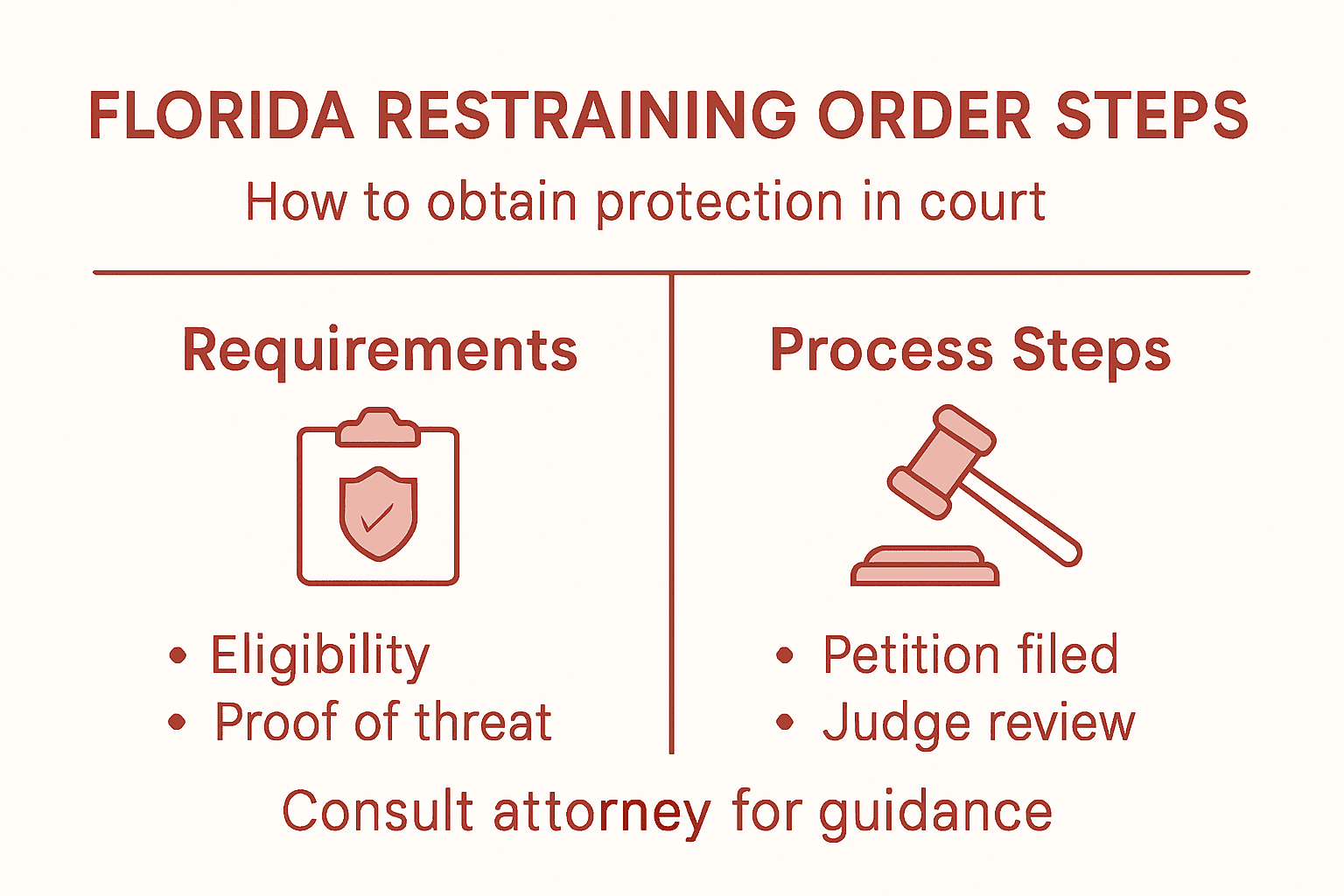
Navigating the legal process for obtaining a protective order in Florida requires careful preparation and understanding of specific procedural steps. Comprehensive court procedures for protection ensure that individuals seeking safety have a structured pathway to legal protection.
The protective order process involves several critical stages:
To initiate the process, petitioners must complete a sworn statement describing the nature of their threat or experiencing violence. Sworn petitions require detailed information about the relationship between parties and specific incidents demonstrating the need for protection. The court clerk can provide necessary forms, though they cannot offer legal advice.
Important procedural details include:
Pro tip: Collect and organize all potential evidence, including text messages, emails, witness statements, and medical records before filing your protective order petition.
Once a protective order is issued, both the petitioner and respondent must understand their specific legal obligations and rights. Critical compliance requirements after court order dictate important behavioral restrictions and potential consequences for violations.
Rights and responsibilities vary depending on the specific type of protective order, but generally include:
Violations of protective orders carry serious legal consequences. Respondents who fail to comply can face immediate arrest, criminal charges, and potential jail time. The court takes these violations extremely seriously, considering them direct challenges to judicial authority.
Important legal considerations include:
Strict compliance with protective order terms is not optional – it is a legal requirement.
Pro tip: Keep detailed records of all interactions and potential violations, as documentation can be crucial if legal enforcement becomes necessary.
Navigating protective orders requires strategic planning and awareness of potential legal and personal risks. Essential safety planning strategies help individuals protect themselves effectively and avoid common mistakes that could compromise their legal protections.
Common pitfalls in obtaining and maintaining protective orders include:
Effective safety planning involves creating a comprehensive strategy that anticipates potential challenges. This includes establishing a support network, identifying safe locations, preparing an emergency exit plan, and maintaining consistent communication with law enforcement and trusted contacts.
Critical steps for minimizing risks include:
Pro tip: Create a detailed safety plan with multiple backup strategies, including emergency contacts, alternative housing options, and preset communication protocols with trusted support networks.
If you are facing threats or harassment and considering a restraining order in Florida, you understand how overwhelming the legal process can be.
From identifying the correct type of protective order to gathering the necessary evidence and navigating court procedures, each step requires careful attention to detail and expert guidance.
At Sacks & Sacks, our dedicated team has over 50 years of combined experience helping clients secure the protection they need through restraining orders and family law services. We provide personalized support to help you understand your options with domestic violence injunctions, dating violence injunctions, and more.
Don’t let fear or uncertainty delay your safety. Take control of your future now by scheduling your free restraining order rights consultation by calling (904) 396-5557.
Florida offers five main types of restraining orders: Domestic Violence Injunctions, Dating Violence Injunctions, Repeat Violence Injunctions, Sexual Violence Injunctions, and Stalking Injunctions.
To obtain a restraining order, you must file a sworn petition in circuit court, demonstrate a genuine fear for your safety, and participate in a hearing where a judge evaluates your request.
Violating a restraining order can lead to immediate arrest and criminal charges. Respondents could also face jail time for non-compliance.
Yes, the protected individual should carry a copy of the order at all times and report any violations, while the respondent must strictly adhere to the no-contact provisions and comply with all behaviors outlined in the order.
 ✓
✓Reviewed by
Family Law Attorney & Partner, Sacks & Sacks