

Most Florida custody cases never reach a judge. About 70% settle in mediation instead. Yet the parents who walk out worse off tend to make their costliest mistakes in the first hour, long before anyone argues about the schedule.
The outcome rarely turns on who has the stronger case. It turns on preparation, tone, and knowing what not to do. Below are the 10 mistakes that derail custody mediation most often, and how to sidestep each one.
Family and dependency cases are one of the largest categories of court-ordered mediation in Florida, with tens of thousands referred every year [4].
For most parents, mediation is not optional. In circuits with an established family mediation program, F.S. § 44.102(2)(c) and Family Law Rule 12.740 direct the court to send contested custody issues to mediation before a trial date is set [1]. It also works: roughly 70% of Florida cases reach settlement in mediation instead of going to trial [3].
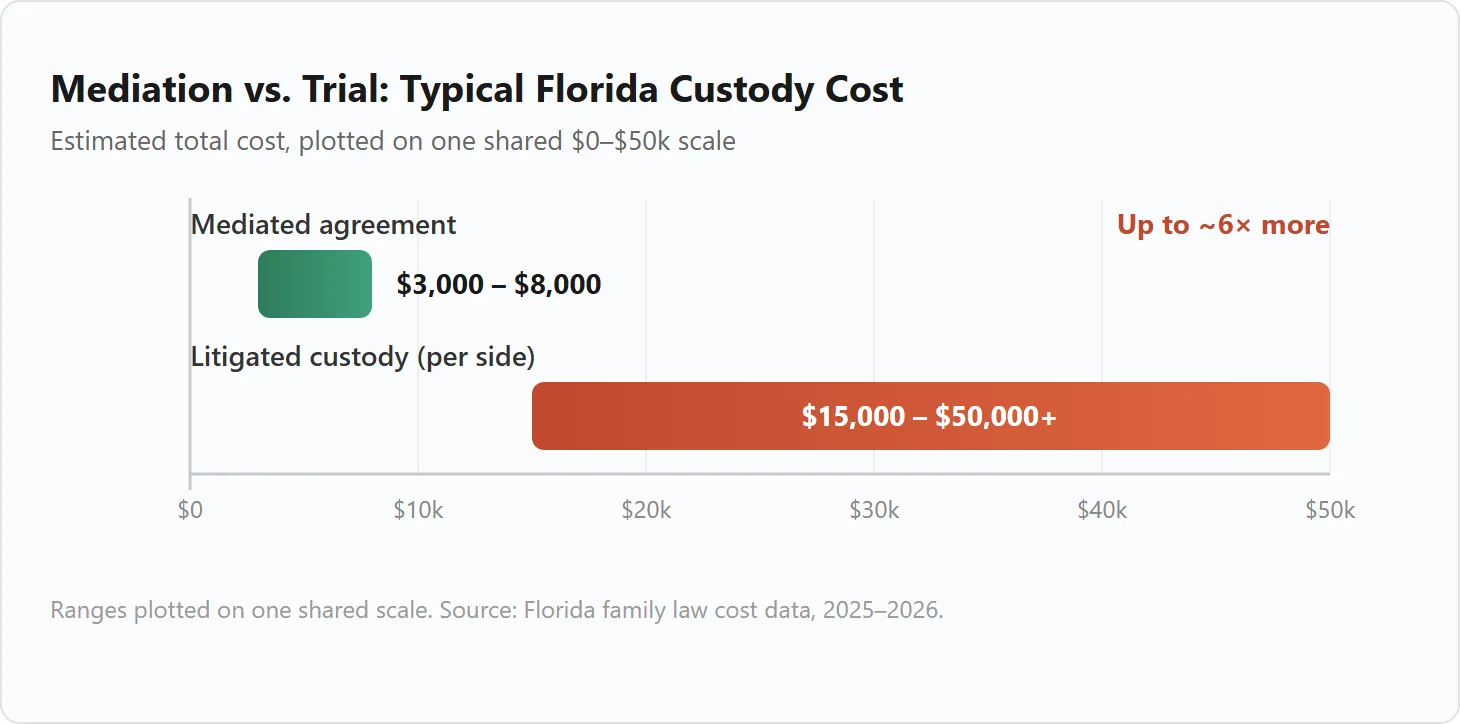
The stakes are high. Private mediation commonly runs $3,000 to $8,000 (far less through court-connected programs), while a litigated custody fight can cost $15,000 to $50,000 or more per side [3]. There’s a quieter benefit too. Parents who build their own agreement tend to follow it more reliably than parents who have a schedule imposed on them by a judge.
The 10 mistakes below are the reasons mediation most often falls apart. Avoid them and your odds of walking out with a fair, workable agreement go up sharply.
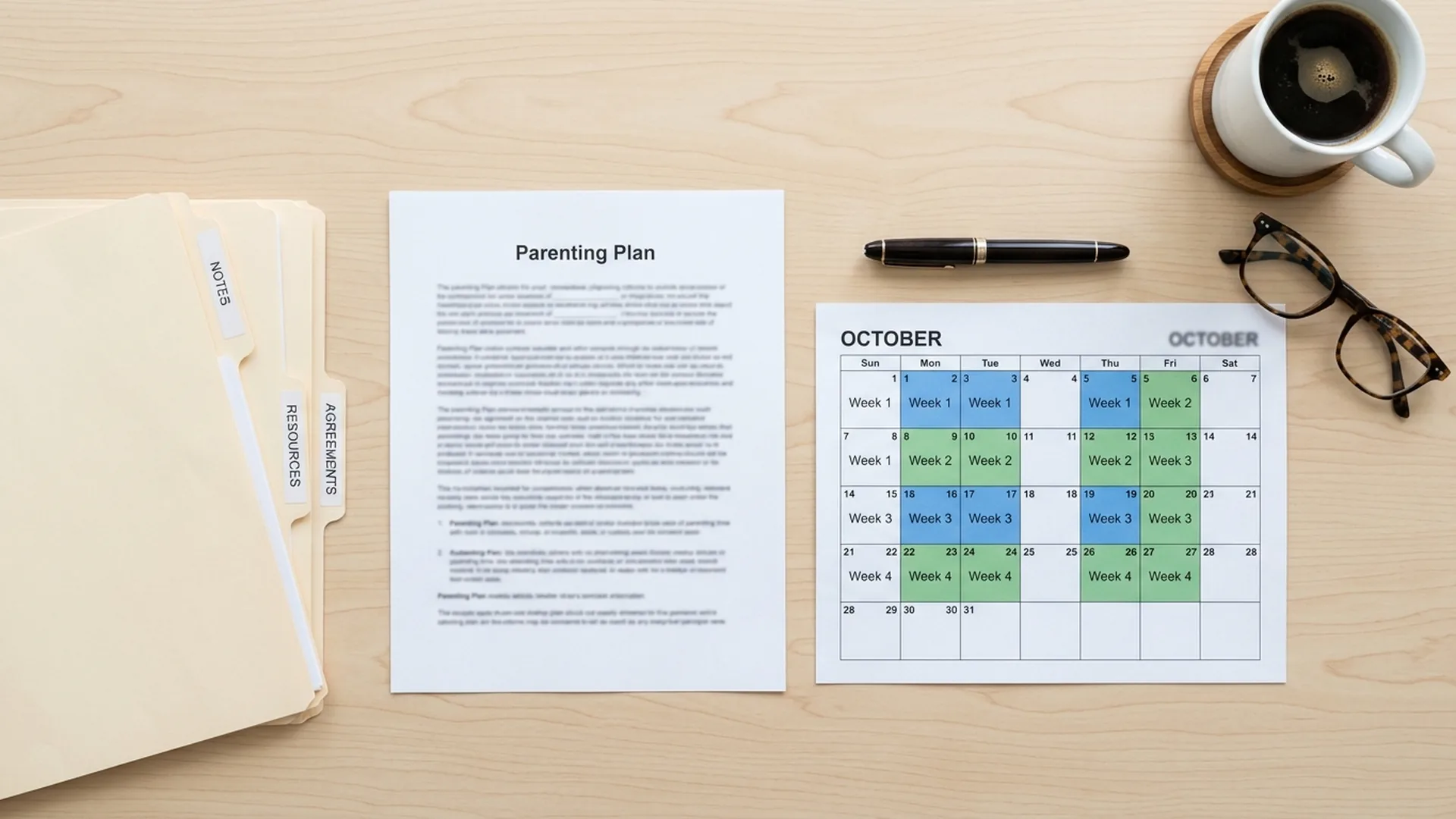
The single biggest mistake is showing up with no written parenting plan. Florida requires a parenting plan in every custody case, and F.S. § 61.13(2)(b) says it must address time-sharing, parental responsibility, communication, and how the parents will handle disputes [5]. Walk in without one and you’re reacting to the other side instead of leading.
Before you sit down, prepare a specific proposal that covers:

Since July 1, 2023, Florida law starts from the presumption that equal time-sharing is in the child’s best interest (Ch. 2023-301, Laws of Florida) [2]. Walking in to demand 80% or 90% of the time, with nothing to back it up, is a non-starter. The presumption is rebuttable, but only by a preponderance of the evidence.
The mediator and the other parent’s attorney know this. If you want to move off 50/50, you need documented reasons tied to the 20 best-interest factors in F.S. § 61.13(3) [5]. Reasons that actually move the needle include:

Without evidence, pushing past 50/50 mostly signals that you’re not bargaining in good faith. That’s the opposite of what you want the mediator to see.
Mediation exists to serve the child’s best interest, not to settle a score. Florida judges weigh 20 specific factors, and one of the heaviest is each parent’s willingness to support the child’s relationship with the other parent (F.S. § 61.13(3)(a)) [5]. Treat the session as revenge and you undercut your own case.
Here’s the trap. If the case later goes to trial and the record shows you were focused on punishing your ex rather than on the child, that can hurt you. Judges look for the “friendly parent,” the one most likely to keep both parents in the child’s life. Be that parent.
Mediation is confidential, so nothing you say can be quoted at trial (F.S. § 44.405) [6]. That protection is real. But an outburst still does damage in the room, in the moment:
Feel your temperature rising? Ask for a private caucus, a separate-room session where you talk one-on-one with the mediator and your attorney. Good mediators expect this and use caucuses all day long to keep hard conversations on track.
Mediation is negotiation, full stop. Show up with rigid positions and refuse to budge on anything, and you’ll hit impasse fast. When mediation collapses, the case goes to trial, which costs many times more and hands every decision to a judge [3].
The fix is to sort your list before you arrive. Separate your true priorities from your preferences:
Give ground on the flexible items to protect the non-negotiables. The mediator is watching to see whether you bargain like someone reasonable. That impression matters.
Mediation isn’t a trial, but documentation still strengthens your position and keeps the conversation grounded in facts. Bring what backs up your proposal:

Documentation turns “I’m the more involved parent” from an opinion into something the mediator can actually see.
Speaking badly about the other parent in mediation, or worse, in front of the children, backfires hard. Florida courts weigh conduct that looks like parental alienation when they run through the 20 best-interest factors, and a pattern of it can cost you time-sharing [5].
Keep concerns factual instead of personal:
Specific, verifiable statements land. Emotional character attacks don’t.
Once the court approves it, a mediated agreement becomes a binding court order [7]. Agree to a schedule you can’t realistically keep, because of your job, your commute, or other commitments, and you’ve set yourself up for a contempt motion down the road.
Before you sign off on anything, be honest with yourself:
You aren’t required to bring a lawyer to mediation, but going alone is a gamble, especially with the 50/50 presumption, complex schedules, or a relocation in play. An experienced family law attorney earns their seat by:
Everything said in mediation is confidential and inadmissible at trial under Florida’s Mediation Confidentiality and Privilege Act (F.S. § 44.405) [6]. In practice, that means:
Use it. Confidentiality is your room to test the other side’s flexibility and negotiate freely. Too many parents hold back out of fear and leave real agreements on the table. Don’t be one of them.
Everything above points back to a handful of habits. Do these five things and you walk in prepared instead of hoping for the best:

Preparing for custody mediation in Jacksonville? Call (904) 396-5557 for a consultation, or contact Sacks and Sacks Law.
In most cases, yes. Under F.S. § 44.102(2)(c) and Family Law Rule 12.740, courts in circuits with a family mediation program refer contested custody and time-sharing issues to mediation before setting a trial date [1]. The main exception is a documented history of domestic violence.
Private mediators generally charge about $200 to $350 per hour, and a full private custody mediation typically totals about $3,000 to $8,000, split between both parties [3]. Many circuits offer court-connected mediation at reduced, income-based rates, often $60 to $120 per person per session. A contested trial instead usually runs $15,000 to $50,000 or more per side.
No. A mediator is a neutral facilitator, not a decision-maker. The mediator can’t impose a settlement, give legal advice, or make recommendations to the judge. Both parents have to voluntarily agree to any settlement. If they don’t, the case goes to trial and the judge decides.
If mediation reaches impasse, the mediator files a report saying only that no agreement was reached. The case then heads to trial, where a judge hears evidence and imposes a parenting plan. Confidentiality rules bar the mediator from reporting what was said or offered [6]. Trial typically adds 6 to 12 months and much higher cost.
Generally, no. Mediation is usually limited to the parents, their attorneys, and the mediator. A new partner in the room can inflame tension and pull focus off the child. If your partner is a stepparent involved in daily parenting, ask your attorney whether their input belongs in the parenting plan conversation.
 ✓
✓Reviewed by
Family Law Attorney & Partner, Sacks & Sacks