Stress often peaks when divorce, custody disputes, and serious debt hit all at once for Jacksonville families. These overlapping challenges blur the lines between what counts as family property, who is truly liable for debt, and which obligations—like child support—cannot be wiped away through bankruptcy.
If you are searching for clear answers, understanding the intersection of family law and bankruptcy is your starting point for protecting your rights and your future.
When you file for bankruptcy in Jacksonville, you’re not just addressing debt. You’re also triggering complex interactions with your marriage, custody arrangements, and spousal obligations. Understanding what family law in bankruptcy actually means is essential before you file.
Family law is the body of law governing marriage, divorce, and child custody. It covers everything from property division to child support obligations. Bankruptcy law addresses your debts, assets, and financial obligations. When these two areas collide, things get complicated fast.
Here’s why this matters:
The intersection of these legal areas creates unique challenges. When spouses file bankruptcy together or separately, spousal liability becomes critical. One spouse’s debt discharge doesn’t automatically protect the other spouse, especially for debts incurred before divorce.
Consider this example: You’re going through divorce and accumulating legal bills. Your spouse files Chapter 7 bankruptcy and discharges $50,000 in joint credit card debt. But creditors can still pursue you for that same debt because you both signed the original agreement. This is where common intersections between family law and bankruptcy create serious consequences.
Child support and alimony operate under different bankruptcy rules than other debts. These cannot be discharged in bankruptcy, meaning you remain obligated to pay them regardless of your financial situation. This protects children and dependent spouses, but it also means your disposable income calculations in Chapter 13 cases must account for these obligations first.
Your automatic stay provides temporary relief from creditors, but it doesn’t stop family law proceedings. Courts can still modify custody arrangements, set child support amounts, and enforce spousal support during your bankruptcy case. The stay protects your assets from creditor collection, not from family law adjustments.
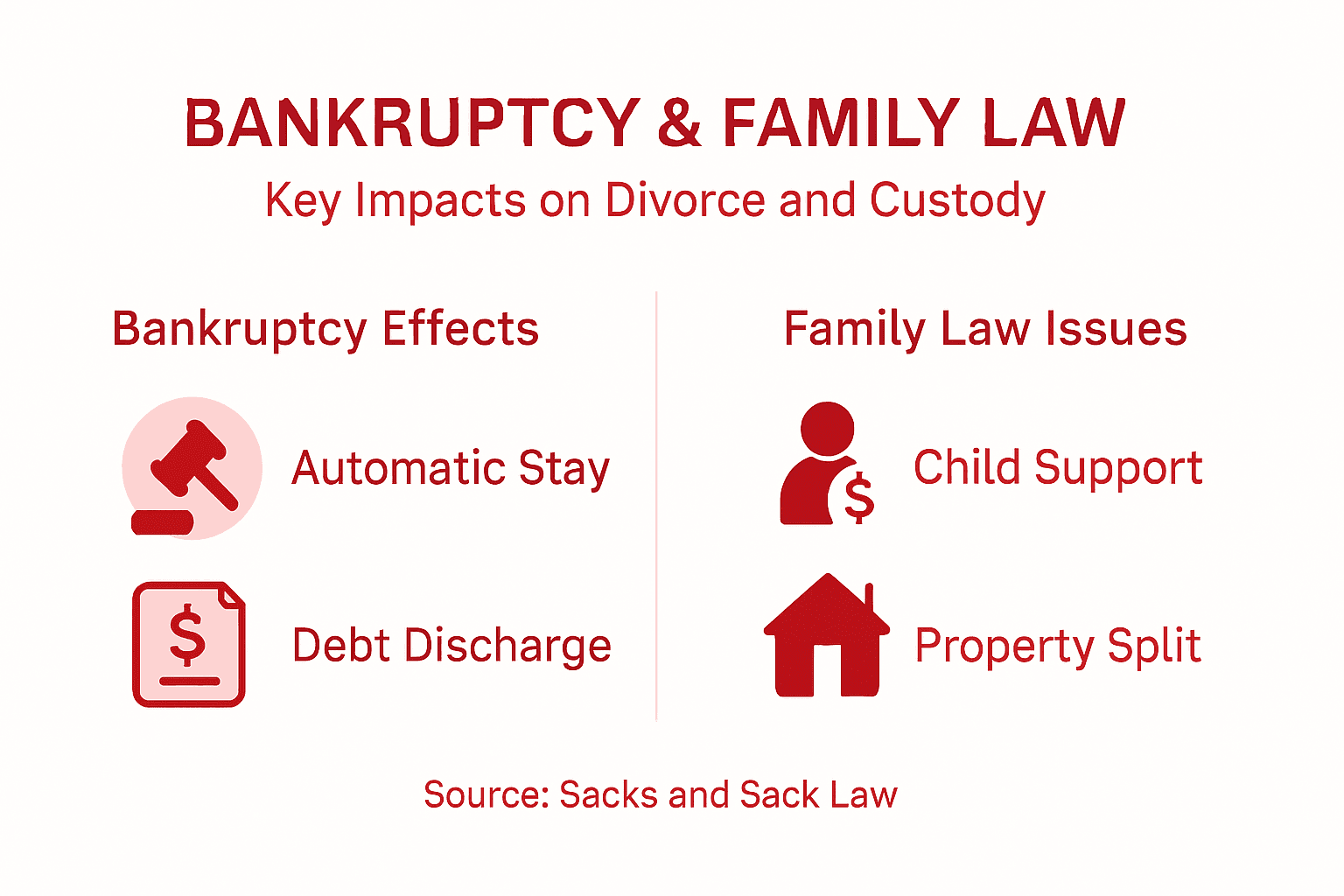
The timing of your bankruptcy filing relative to your divorce creates different outcomes. Filing before divorce finalizes means your marital assets go into the bankruptcy estate. Filing after divorce is complete means only your individual assets and debts are involved. This distinction shapes how much property is available to divide and which debts you’re responsible for.
Not all bankruptcy filings are created equal. The chapter you choose determines which debts get discharged, how your assets are handled, and what happens to your family law obligations. In Jacksonville, understanding these differences is critical before you file.
The main bankruptcy chapters relevant to families are Chapter 7 and Chapter 13. Chapter 7 involves liquidation of non-exempt assets to repay creditors, while Chapter 13 creates a repayment plan spanning three to five years. Each approach affects your divorce and custody situation differently.
Chapter 7 Bankruptcy works like this:
Chapter 7 hits differently during divorce. If you file before the divorce is finalized, marital assets enter the bankruptcy estate and may be sold to pay creditors. If you file after divorce, only your individual property and debts are involved. This timing distinction can mean thousands of dollars in difference.
Chapter 13 Bankruptcy works differently:
Chapter 13 offers more flexibility for family situations. If you’re behind on child support or facing foreclosure, Chapter 13 can help you catch up while protecting your home. The automatic stay stops creditor collection immediately, giving you breathing room to reorganize your finances.
Joint versus individual filings create distinct outcomes. Spouses can file together or separately depending on their debt and asset situations. A joint filing treats you as one bankruptcy estate, while separate filings keep assets and debts divided. When you can’t afford child support obligations, Chapter 13 may restructure your debts to free up income for these non-dischargeable payments.
Family farmers have Chapter 12 bankruptcy available, which operates like Chapter 13 but with provisions tailored to agricultural operations and seasonal income patterns. This chapter rarely applies in urban Jacksonville, but it’s worth knowing if you operate a farm or agricultural business.
Your bankruptcy chapter choice directly impacts child support and spousal support obligations. Neither obligation can be discharged, but Chapter 13 incorporates them into your payment plan, ensuring consistent payments. Chapter 7 doesn’t address these obligations—they continue unchanged after discharge.
Here’s a side-by-side comparison of the main bankruptcy chapters and their impact on family law issues:
| Aspect | Chapter 7 Bankruptcy | Chapter 13 Bankruptcy |
|---|---|---|
| Asset treatment | Non-exempt assets liquidated | Assets retained under repayment |
| Debt management | Most unsecured debts discharged | Debts restructured over 3-5 years |
| Child/spousal support | Survives bankruptcy, unchanged | Priority payment in repayment plan |
| Divorce timing impact | Marital assets included pre-divorce | Flexible asset and debt handling |
The automatic stay applies to all chapters equally. Family law proceedings can continue despite your bankruptcy filing. Courts will modify custody, set child support, and enforce alimony during your case. Your bankruptcy doesn’t pause family law—it only protects your assets from creditor collection.
Filing for bankruptcy during divorce creates a legal collision. Your automatic stay halts creditor collection, but it doesn’t pause your divorce case. Understanding how these two proceedings interact is essential for protecting your interests in Jacksonville.

The timing of your bankruptcy filing relative to divorce matters enormously. Filing bankruptcy before or after divorce produces different outcomes for asset division, debt allocation, and property settlements. Filing before the divorce finalizes means marital assets enter the bankruptcy estate. Filing after means only your individual property is involved.
Here’s what happens when you file during a divorce:
The automatic stay is powerful but limited. It stops creditors from calling, suing, or garnishing wages. However, it does not stop your spouse from pursuing divorce, modifying custody arrangements, or enforcing child support. Family law matters proceed on their own timeline, separate from bankruptcy.
Your bankruptcy directly affects divorce settlement negotiations. Creditors now have claims against marital assets that would normally go to you or your spouse. This shrinks the total pie available to divide. A $300,000 retirement account becomes $250,000 after bankruptcy debts are paid. Your settlement must account for this reduction.
Property division becomes complex when bankruptcy overlaps divorce. Marital property in the bankruptcy estate may be liquidated to pay creditors before divorce settlement occurs. This forces strategic decisions about bankruptcy and divorce timing that affect what assets remain for property division.
Joint debts create special complications. If you and your spouse accumulated debt together, both of you remain liable even after divorce unless the court explicitly relieves one party. A creditor can pursue either spouse for the full amount, regardless of divorce settlement language. Bankruptcy discharge protects only the filing spouse, not the other.
Child support and alimony continue unaffected by bankruptcy. These obligations are non-dischargeable, meaning your bankruptcy doesn’t eliminate them. However, your reduced income after bankruptcy may justify modification of support amounts. Courts will consider your post-bankruptcy financial situation when setting obligations.
Your divorce settlement should address which spouse pays certain debts. Simply listing “creditor X is [spouse’s] responsibility” doesn’t protect you legally. If your spouse fails to pay, creditors still pursue you. The bankruptcy estate handles pre-discharge debts differently than post-divorce agreements.
Consider this scenario: You file Chapter 13 bankruptcy while divorcing. Your repayment plan incorporates child support as a priority obligation. The plan runs three to five years while your divorce finalizes. Both proceedings operate independently, creating coordination challenges.
Pro tip: File bankruptcy and finalize divorce in the correct order—consult both a bankruptcy and family law attorney to determine whether to finish divorce first or file bankruptcy simultaneously, as the sequence dramatically affects your financial outcome.
Your bankruptcy filing does not change your custody arrangement or eliminate your child support obligations. This is one of the clearest distinctions between bankruptcy and family law. Courts protect children by making these obligations non-negotiable regardless of your financial situation.
Custody remains unchanged. Your bankruptcy has zero impact on who gets custody or visitation rights. The court that established your custody order operates independently from bankruptcy court. Your child still lives with the same parent, follows the same schedule, and maintains the same relationships. Bankruptcy doesn’t alter parenting time.
Here’s what stays the same:
Child support obligations survive bankruptcy and cannot be discharged. This means you remain legally responsible to pay the full amount ordered by the court. If you file Chapter 7 bankruptcy, your child support obligation continues unchanged. If you file Chapter 13, your support obligation becomes a priority payment within your repayment plan.
Priority status matters significantly. In Chapter 13 bankruptcy, child support payments rank as priority claims, meaning they’re paid before most other debts. Your repayment plan must allocate funds to child support first. This protects your children from financial hardship while you reorganize your debts.
Your reduced income after bankruptcy may justify modification. While bankruptcy doesn’t eliminate your obligation, courts recognize that your financial situation changes. If your income drops significantly due to bankruptcy or related circumstances, you can request a modification of support amounts. The court will review your new financial reality and adjust accordingly.
Back child support creates special complications. If you owe arrears when you file bankruptcy, these unpaid amounts cannot be eliminated. Chapter 13 bankruptcy offers a mechanism to catch up on arrears through your repayment plan. You can pay back child support over your three to five year plan while staying current on ongoing obligations.
Educational accounts and support have unique treatment. Funds in 529 college savings accounts may be protected from bankruptcy liquidation depending on how much you’ve contributed. Private school tuition, however, is treated as a general expense and doesn’t receive the same protection as child support.
Your bankruptcy disclosure must list all child support obligations. When you file, you must account for every child support responsibility. Courts review these disclosures to ensure you’re not hiding obligations. Failing to disclose child support creates serious legal consequences.
Consider this scenario: You owe $800 monthly child support plus $2,000 in back support. You file Chapter 13 bankruptcy. Your repayment plan allocates $1,000 monthly to catch up arrears over five years while paying current support. This structure ensures your children receive priority while you reorganize remaining debts.
Pro tip: Document all child support payments during bankruptcy to prove compliance with your obligation, as this record protects you in future modification requests and demonstrates good faith to the court.
Your bankruptcy discharge is final, but your legal rights and obligations don’t simply vanish. Understanding what happens after your case closes is essential for rebuilding your financial life in Jacksonville. Some debts disappear. Others follow you indefinitely.
Discharged debts are gone forever. Once the bankruptcy court grants your discharge order, creditors cannot pursue you for those debts. Calling, suing, or reporting them to credit bureaus violates federal law. Your liability ends completely. This relief applies to credit cards, medical bills, personal loans, and most unsecured debts.
However, certain debts survive discharge:
Spousal obligations remain your responsibility even after bankruptcy discharge. Alimony and child support cannot be eliminated, regardless of your financial hardship. These continue at their original amounts unless modified by court order. Your bankruptcy filing doesn’t trigger automatic modification—you must request it separately.
Your spouse’s individual debts may remain their problem. If your spouse filed separately from you, their individual debts were discharged in their case only. You’re not liable for their discharged debts. However, joint debts you both signed create joint liability, meaning creditors can pursue either of you for the full amount, even if only one spouse’s debt was discharged.
Property rights change after bankruptcy. Assets you protected through exemptions remain yours. Assets liquidated are gone. If you filed Chapter 13 and completed your repayment plan, you keep property you paid for through the plan. Understanding your Chapter 7 bankruptcy options helps clarify which assets you’ll retain.
Your credit report reflects the bankruptcy for seven to ten years, depending on the chapter. This impacts your ability to borrow, rent housing, or secure employment. Some Jacksonville employers conduct credit checks, so bankruptcy may affect job prospects. However, federal law prohibits discrimination based solely on bankruptcy filing.
Post-bankruptcy creditors can still pursue non-discharged debts. If you still owe back taxes, student loans, or child support arrears, creditors retain collection rights. They can garnish wages, place liens on property, or intercept tax refunds. These obligations don’t disappear—they only change form.
Court orders don’t change automatically. Your child support or alimony obligation stays at its original amount unless you formally request a modification. Bankruptcy alone doesn’t reduce these obligations. You must file a separate motion with the family court demonstrating changed circumstances.
Your legal status post-bankruptcy varies by debt type. For discharged debts, you have no obligation and no liability. You can legally refuse to pay them. For non-discharged debts, you remain fully obligated. The distinction determines your rights and responsibilities.
Consider this scenario: Your Chapter 7 bankruptcy discharged $100,000 in credit card debt and $50,000 in medical bills. But you still owe $15,000 in back child support and $800 monthly ongoing support. The credit card debt is gone forever. The child support remains enforceable with full collection powers available to your ex-spouse.
Pro tip: Keep your bankruptcy discharge papers and track non-discharged debts separately—this documentation protects you if creditors try to collect on discharged debts and helps demonstrate your post-bankruptcy obligations.
Facing the complex overlap of family law and bankruptcy issues can create overwhelming stress and uncertainty. Whether you are managing obligations like child support and alimony or dealing with asset division during divorce while planning a bankruptcy filing, understanding your rights and protections is critical. The intersection of family law in bankruptcy, spousal liabilities, and custody arrangements demands knowledgeable guidance to safeguard your future and protect your family.
At Sacks & Sacks, our team combines over 50 years of experience in family law and bankruptcy to provide personalized solutions tailored to your unique situation. We help you navigate Chapter 7 and Chapter 13 bankruptcy options, coordinate timing with divorce proceedings, and ensure child support obligations are managed effectively.
Don’t wait until conflicts increase and options narrow. Call (904) 396-5557 to schedule your free bankruptcy consultation and take control of your legal challenges with professionals who understand the emotional and financial stakes involved.
Child support obligations survive bankruptcy and cannot be discharged. You remain responsible for paying the full amount ordered by the court regardless of your financial situation.
Filing for bankruptcy before finalizing a divorce includes marital assets in the bankruptcy estate, potentially complicating property division. Filing after the divorce means only your individual assets are involved.
Yes, you can request a modification of child support payments after filing for bankruptcy, especially if your income has decreased significantly. The court will review your new financial circumstances to determine if adjustments are warranted.
No, spousal support obligations cannot be discharged in bankruptcy. You remain responsible for them, and any changes to the amount must be formally requested through the court.
 ✓
✓Reviewed by
Family Law Attorney & Partner, Sacks & Sacks